Rentvesting for Doctors: Buy Where You Can Afford, Live Where You Love
Rentvesting for Doctors: Buy Where You Can Afford, Live Where You Love
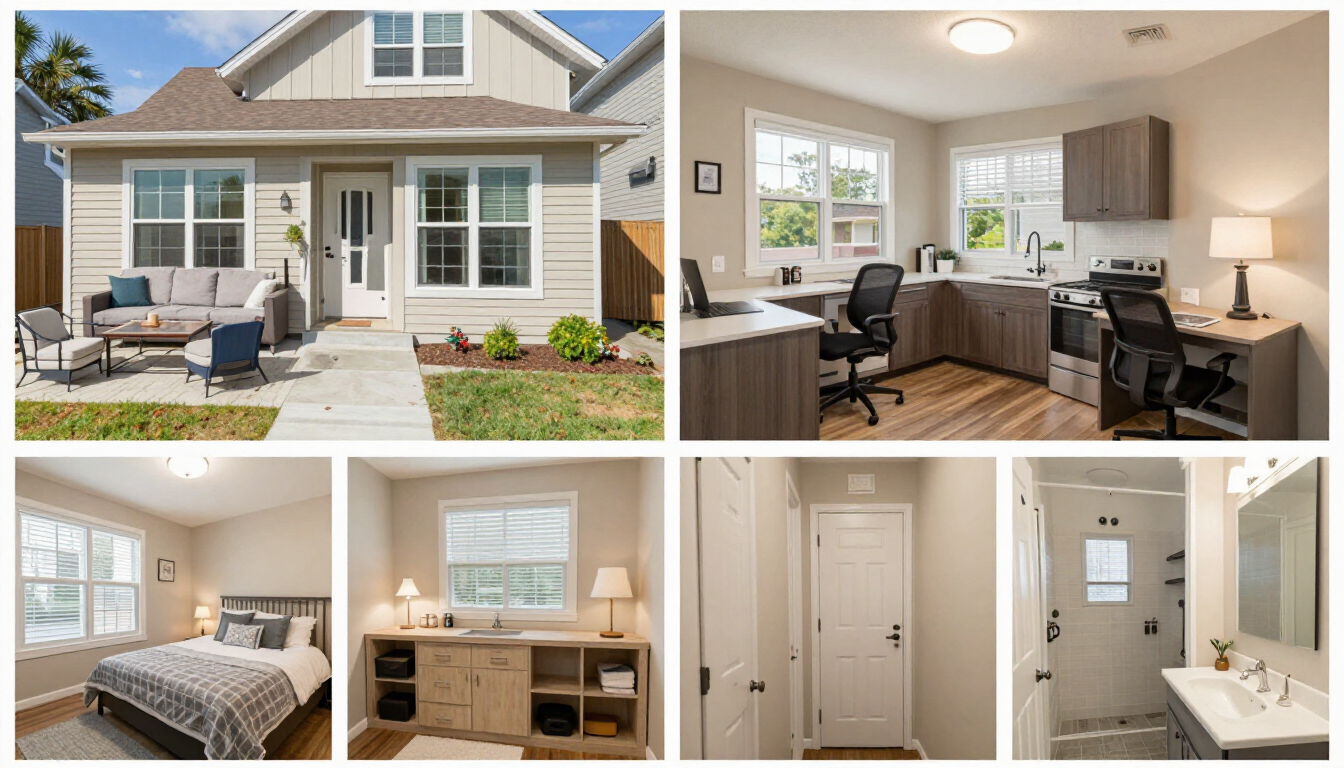
For many doctors, buying a home isn't as straightforward as simply purchasing the property they want to live in.
Medical training can mean moving between hospitals, changing cities for rotations, working long hours and paying a premium to live close to major hospitals and medical precincts. At the same time, property prices in the suburbs where you want to live may be well beyond your current borrowing capacity.
This is where rentvesting for doctors can be worth considering.
Rentvesting involves renting the home you want to live in while purchasing an investment property in a location that is more affordable. Rather than waiting years to save enough for your ideal home, you can potentially enter the property market sooner while maintaining the flexibility that comes with renting.
For eligible medical professionals, specialised doctor home loan and medico lending policies may also provide access to higher LVRs and LMI waivers, potentially making the strategy more accessible.
Quick Answer: What Is Rentvesting for Doctors?
Rentvesting means renting your preferred home while buying an investment property elsewhere.
For doctors, the strategy can make sense when:
- You want to live close to a major hospital or medical precinct.
- Your training or career may require you to move between hospitals.
- Your preferred suburb is currently outside your borrowing capacity.
- You want to enter the property market without waiting years to save a larger deposit.
- You want to build property exposure while maintaining lifestyle and career flexibility.
However, rentvesting isn't automatically the right strategy. The investment property's expected costs, rental income, growth prospects, loan structure, tax implications and your long-term plans all need to be considered.
Why Rentvesting Can Suit Doctors
Doctors often have a different career and income trajectory from the average home buyer.
During internship, residency and specialist training, you may move between hospitals or accept placements in different locations. Buying a home in every location you work isn't practical.
At the same time, renting close to work can be expensive.
Rentvesting separates the two decisions:
- Where you live → based on your lifestyle and career.
- Where you buy → based on affordability, investment fundamentals and your long-term financial strategy.
For example, a doctor working in Melbourne may want to rent close to the CBD or a major hospital but may not yet want to commit to purchasing an expensive property in that area.
Instead, they could potentially purchase an investment property in a more affordable market while continuing to rent near work.
The investment property becomes an asset that may provide rental income and potential long-term capital growth, while renting gives the doctor flexibility to move when their career requires it.
Rentvesting and the Doctor Income Curve
One of the biggest advantages for doctors is the potential change in borrowing capacity throughout their career.
An intern's income is very different from that of an experienced specialist or established practitioner.
This creates a common dilemma:
Should you wait until your income is higher before buying, or enter the property market earlier with a more affordable investment?
There is no universal answer.
Waiting may allow you to purchase a more expensive owner-occupied property later, but it also means you remain outside the property market during that period.
Rentvesting provides another option: purchasing an investment property that fits your circumstances today while continuing to rent.
If the property performs well over time and your income increases, you may eventually have more options when you are ready to purchase your long-term home.
Of course, property values can fall as well as rise, and an investment property should never be purchased simply because you expect prices to increase.
Can Doctors Use a Medico Home Loan for an Investment Property?
Potentially, yes.
Some lenders offer specialised medico home loan policies that can extend to investment lending for eligible medical professionals.
Depending on the lender and your circumstances, a doctor may be able to access benefits such as:
- Higher maximum LVRs
- LMI waivers
- Professional interest rates
- Reduced fees
- Flexible treatment of certain medical income
- Different lending policies for doctors and medical specialists
The important point is that not every lender treats doctors the same way.
A lender may have a different policy depending on whether you are:
- An intern or resident
- A registrar
- A specialist
- A GP
- Self-employed
- Working through a company or trust
- Receiving overtime or allowances
- Purchasing an owner-occupied property
- Purchasing an investment property
That's why comparing professional lending policies can be particularly important for doctors.
How Much Could a Doctor Borrow?
Your borrowing capacity is determined by more than your profession.
Lenders generally consider factors including:
- Base salary
- Overtime
- Allowances
- Bonuses
- Rental income
- Existing debts
- HECS-HELP or other student debt
- Credit card limits
- Living expenses
- Dependants
- Existing property loans
- The lender's assessment criteria
Some lenders may also have specific policies for medical professionals that affect how certain income is assessed.
For hospital-employed doctors, for example, overtime and allowances may be treated differently from one lender to another.
This means two doctors with similar salaries can potentially receive different borrowing outcomes depending on which lender assesses their application.
The Numbers Behind Rentvesting
Rentvesting only makes sense if the numbers work for your circumstances.
Consider a hypothetical doctor who wants to live in a suburb where a suitable home costs $1.2 million.
They may not currently want to commit to that level of debt.
Instead, they could continue renting their preferred home while purchasing an investment property for $650,000.
The investment property generates rental income, while the doctor continues paying rent for their own home.
The relevant calculation isn't simply:
Rent vs mortgage.
You need to consider the complete financial position.
If you buy your own home:
- Mortgage repayments
- Council rates
- Insurance
- Maintenance
- Purchase costs
- Opportunity cost of the deposit
- Potential capital growth
If you rentvest:
- Rent for your own home
- Investment loan repayments
- Property management fees
- Council rates
- Insurance
- Maintenance
- Vacancy periods
- Rental income
- Potential tax deductions
- Potential capital growth
Your broker and accountant can help you model these scenarios based on your actual income, deposit and financial goals.
Don't Choose an Investment Property Based on Price Alone
One of the biggest mistakes with rentvesting is assuming that the cheapest property is automatically the best investment.
It isn't.
A $450,000 property may look attractive compared with a $700,000 property, but purchase price alone doesn't tell you whether an investment is suitable.
Consider factors such as:
- Local employment
- Population growth
- Infrastructure
- Vacancy rates
- Rental demand
- Supply of new properties
- Property type
- Land component
- Rental yield
- Potential maintenance costs
- Local market conditions
You should also consider whether you would be comfortable owning the property if the market underperformed.
Don't buy a poor-quality property simply because a lender will approve the loan.
Your borrowing capacity tells you what you may be able to borrow. It doesn't tell you what you should buy.
Rentvesting and Tax: What Doctors Should Know
Tax is often part of the rentvesting conversation, particularly for higher-income professionals.
If an investment property generates less income than its deductible expenses, the property may be negatively geared. Depending on your circumstances, an investment loss may be deductible against other taxable income under Australian tax rules.
However, negative gearing should not be the reason you buy a property.
A tax deduction does not turn a poor investment into a good one.
For example, spending $10,000 in deductible expenses does not mean you receive $10,000 back as a tax refund. The actual tax benefit depends on your taxable income, applicable tax rates and the nature of the expense.
There can also be other tax considerations, including:
- Capital gains tax when the property is sold
- Depreciation
- Deductibility of interest
- Ownership structure
- Future changes to the property's use
- Potential implications when purchasing your future home
Your accountant or registered tax professional should assess your individual circumstances before you make a purchase.
What About Your Future Family Home?
This is one of the most important questions to consider before rentvesting.
Imagine you purchase an investment property today and, five years later, your income has increased significantly and you're ready to purchase your long-term family home.
You may then have:
Investment property + investment loan + rental income
and
Future owner-occupied property + new home loan
Your original loan structure can therefore affect your future borrowing capacity.
This is why planning beyond the first purchase matters.
Before buying an investment property, think about:
Where do I want to live in five years?
Will I likely need a larger home?
Will my income change significantly?
Do I want to retain the investment property when I buy my family home?
Could I comfortably manage both properties if interest rates or rental conditions changed?
These questions can help determine whether rentvesting fits into your broader financial plan.
How Should a Rentvesting Loan Be Structured?
Loan structure can be particularly important if your long-term plan involves purchasing a home later.
A common consideration is keeping your investment lending separate from future owner-occupied lending rather than unnecessarily cross-collateralising properties.
An offset account may also provide flexibility while you build savings for your future home.
Some investors also consider interest-only lending for an investment property. While this can reduce required repayments during the interest-only period, it doesn't reduce the amount borrowed and can result in higher repayments when the loan moves to principal and interest.
The right structure depends on your circumstances, cash flow and long-term objectives.
A broker can help explain the available structures, while your accountant can advise on the tax implications.
Rentvesting vs Buying Your Own Home
There are advantages and disadvantages to both approaches.
RentvestingBuying Your Own HomeWhere you liveYou rentYou ownLocationCan separate lifestyle from investmentUsually determined by where you want to liveFlexibilityGenerally higherGenerally lowerProperty exposureInvestment propertyOwner-occupied propertyRental incomePotentially yesNoMaintenanceInvestment property owner responsibilitiesYour responsibility as ownerPotential tax deductionsInvestment expenses may be deductibleGenerally limited for your main residenceFirst-home benefitsMay affect eligibility depending on circumstancesMay provide access if eligible
Neither strategy is automatically better.
The right choice depends on your income, deposit, borrowing capacity, lifestyle, career plans and investment objectives.
Common Rentvesting Mistakes for Doctors
1. Buying the wrong property
Don't let your borrowing capacity determine your investment strategy.
A property should be assessed on its investment characteristics, not simply whether you can afford it.
2. Ignoring future borrowing capacity
Your current loan may affect your ability to purchase your future home.
Think about your next property purchase before committing to your first one.
3. Focusing only on negative gearing
A tax deduction should never be the primary reason for purchasing an investment property.
4. Forgetting vacancies and maintenance
Rental income isn't guaranteed.
Allow for vacancy periods, repairs, insurance, property management and other ownership costs.
5. Choosing a loan based only on the interest rate
For doctors, the lowest advertised rate isn't necessarily the most suitable loan.
The lender's medico policy, LVR, LMI waiver, income assessment and loan structure can all affect the overall outcome.
6. Assuming every lender has the same doctor policy
They don't.
Professional lending criteria can vary considerably between lenders, and policies can change.
Is Rentvesting Right for You?
Rentvesting may be worth exploring if you're a doctor who:
- Wants to live in an expensive area but cannot yet afford to buy there.
- Is still completing medical training.
- Expects to move hospitals or locations.
- Wants to enter the property market earlier.
- Has a deposit but doesn't want to use it all for a large owner-occupied property.
- Wants to build a property portfolio over time.
It may be less suitable if the strategy creates excessive cash-flow pressure, limits your future borrowing capacity or requires you to purchase an investment property you aren't comfortable owning.
The key is to look at the entire financial picture rather than focusing on one benefit.
How Medico Loan Can Help
At Medico Loan, we understand that doctors don't necessarily follow a traditional career or home-buying path.
Your first property may be an investment rather than your forever home. Your income may change significantly over the next few years. You may receive overtime, allowances or private-practice income that different lenders assess differently.
Our role is to help you understand how different lender policies may apply to your situation.
We can help you explore:
- Doctor home loan options
- Investment property loans
- LMI waiver opportunities
- Higher-LVR professional lending
- Borrowing capacity
- Loan structure
- Refinancing options
- Future home purchase planning
The goal isn't simply to get you approved for the biggest loan possible. It's to help you understand what the numbers look like and whether the strategy fits your longer-term plans.
The Bottom Line: Should Doctors Consider Rentvesting?
Rentvesting can be a useful property strategy for doctors who want to maintain lifestyle and career flexibility while entering the property market.
Instead of choosing between renting where you want to live and buying where you can afford, rentvesting allows you to do both.
But the strategy needs to be approached carefully.
The investment property needs to make sense. The loan structure needs to support your future plans. Your cash flow needs to remain manageable, and the tax implications should be understood before you buy.
For doctors, specialised lending policies can potentially make the numbers more attractive, particularly where a lender offers an LMI waiver or higher LVR for eligible medical professionals.
Before you make an offer on an investment property, speak with your broker and accountant and model the strategy based on your actual circumstances.
Thinking about rentvesting?
If you're a doctor, specialist, dentist or other medical professional considering your first investment property, Medico Loan can help you understand your lending options and whether a professional loan policy may apply to your situation.
Get in touch with Medico Loan to discuss your options.
General information only. This article does not constitute personal financial, investment, tax or credit advice. Lending criteria, LVR limits, LMI waiver policies, interest rates and eligible occupations vary between lenders and can change. Property values and rental income can fall as well as rise. Tax outcomes depend on individual circumstances and should be confirmed with a qualified tax professional. Credit approval is subject to lender assessment and responsible lending requirements.
Tighten the article for readabilityAdd a stronger doctor-specific example